
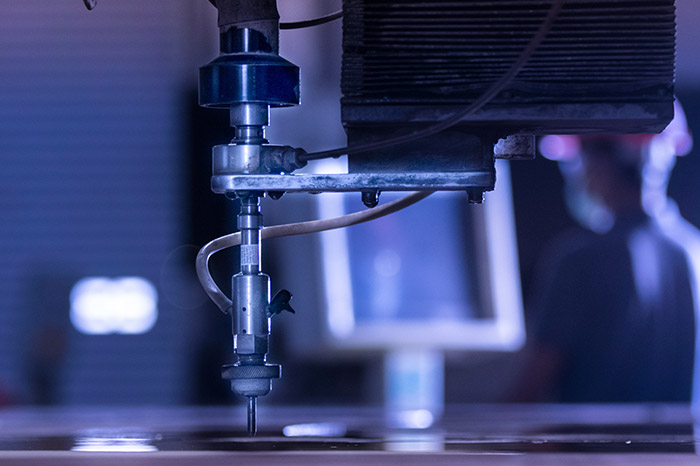
Intricate designs demand precision, especially when materials react badly to heat. Traditional cutting methods can leave burn marks, warped edges, or altered material properties after intense processing. Water-based cutting offers a cooler solution that handles detailed profiles with impressive accuracy.
By using high-pressure water and abrasive particles, water cutting delivers clean results while protecting the material beneath the cut.
Cold cutting keeps materials stable
Water cutting uses a high-pressure stream that slices through metal, stone, glass, composites, and other materials without generating the intense heat associated with flame or laser processes. This cold cutting process protects the material from thermal distortion and unwanted structural changes.
Operators get cleaner edges while preserving the workpiece’s original characteristics. The process also suits materials that react poorly to high temperatures, making it a practical choice for demanding fabrication tasks.
Complex designs receive precise cuts
Computer-controlled water cutting equipment makes intricate curves, sharp corners, narrow openings, and detailed patterns easier to produce. The cutting head follows digital design data with consistent movement, allowing fabricators to reproduce complicated profiles accurately.
This precision supports decorative panels, machine components, architectural features, industrial parts, and custom prototypes. Fine control also reduces production errors, giving designers more freedom when developing detailed components.
Abrasive particles expand cutting capability
Pure water handles softer materials, while abrasive particles add power for harder materials. Garnet abrasive commonly works alongside high-pressure water to cut materials such as stainless steel, aluminum, granite, ceramic, and composite sheets.
Operators adjust pressure, cutting speed, and abrasive flow according to material thickness and density. This flexibility lets one cutting system handle diverse projects without exposing sensitive materials to damaging heat.
Clean edges support efficient fabrication
A precise cut reduces secondary finishing work and helps fabricators maintain consistent dimensions across repeated parts. Water cutting also produces a relatively narrow kerf, which allows efficient material use during layout and nesting.
Designers can place intricate details close together while maintaining controlled spacing. With accurate programming and suitable cutting parameters, manufacturers produce dependable components while reducing material waste and minimizing extra machining operations.
A practical choice for detailed fabrication
Water cutting gives manufacturers a reliable method for producing intricate profiles while avoiding thermal stress. Its cold process protects material integrity, while computer-controlled movement supports detailed designs and repeatable results.
From industrial components to architectural pieces, the technology handles demanding applications with precision. For projects involving heat-sensitive materials or complicated profiles, water cutting offers a versatile solution that combines accuracy, flexibility, and clean fabrication.